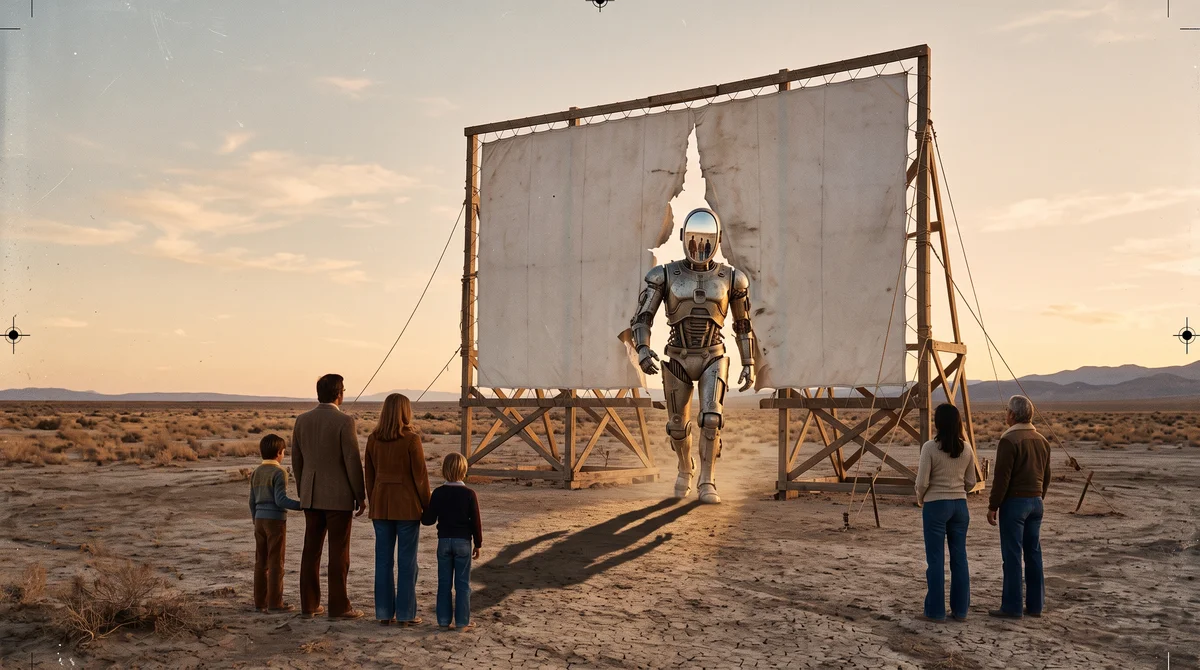
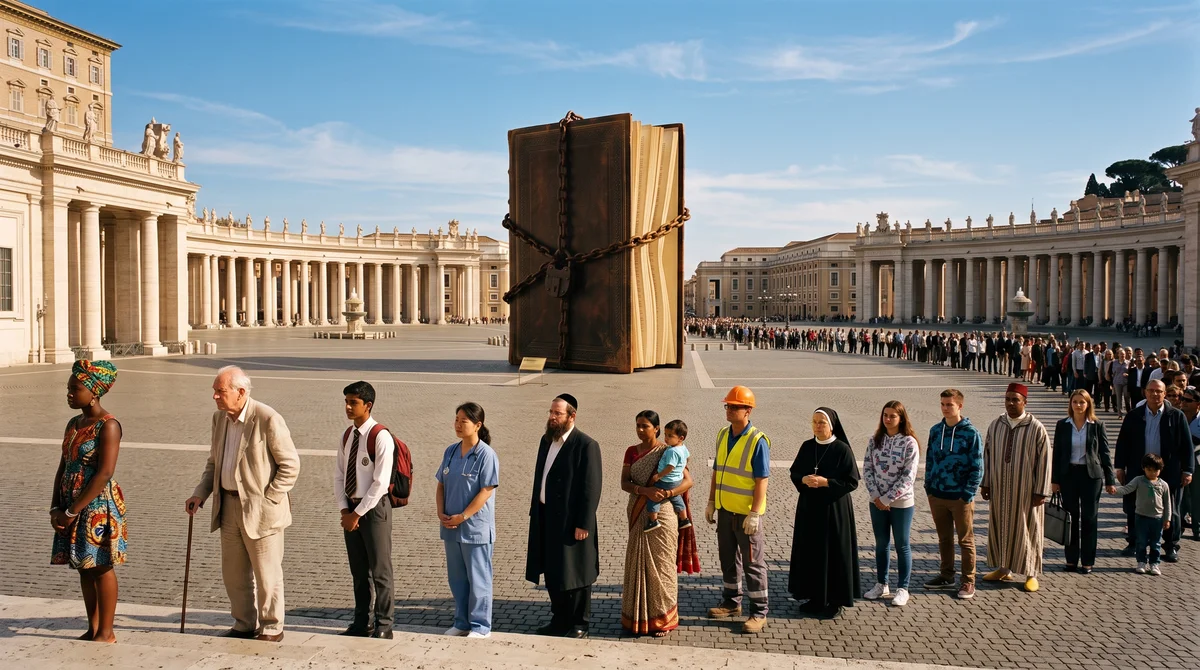
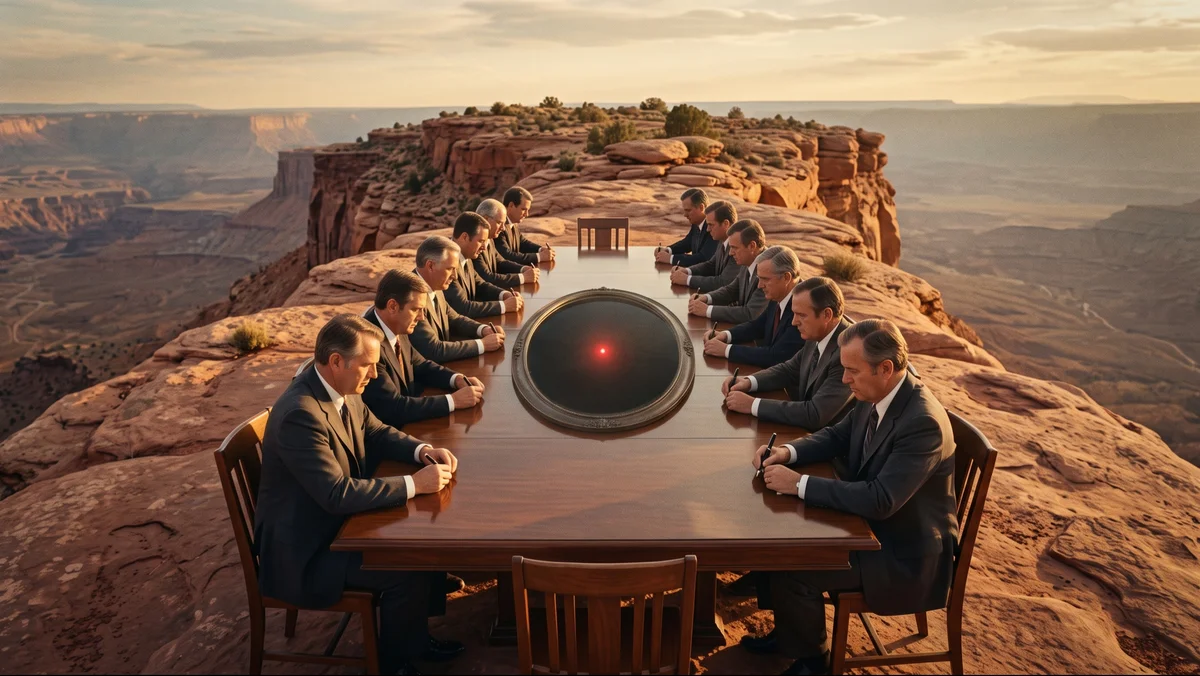
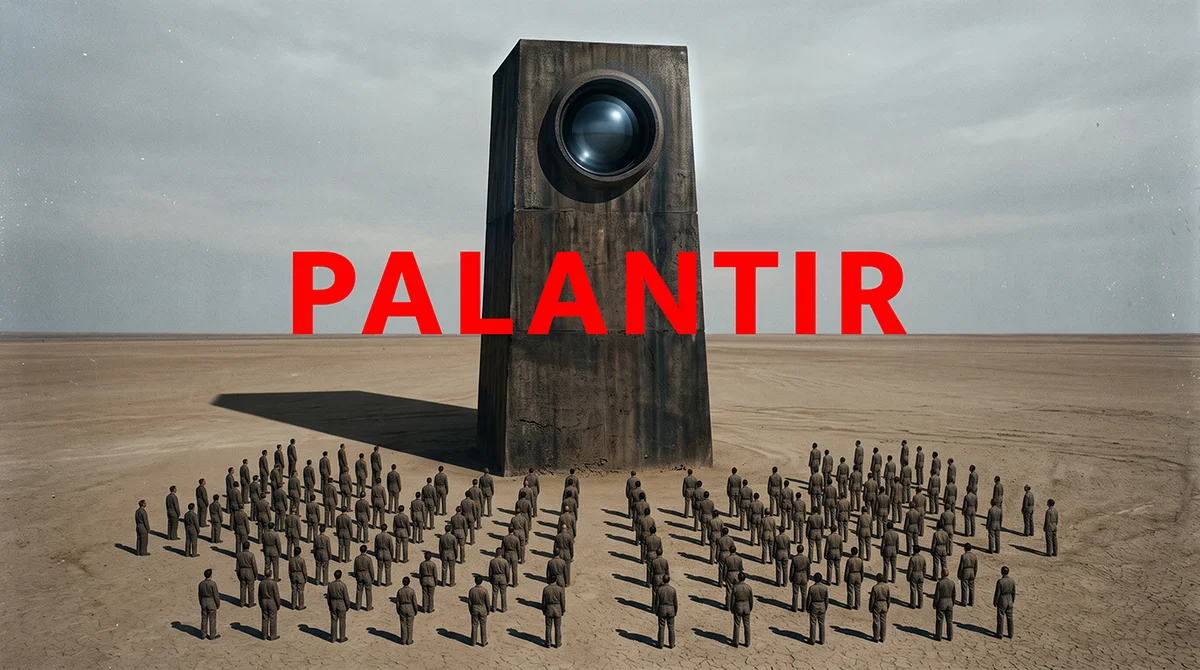
AI and the Three Ring Circus of Fear
If they're not afraid of artificial intelligence, why do the people building it keep talking about how terrified they are? What's their game?
July 16, 2026The people building artificial intelligence are not afraid of it.
They know the technology better than anyone alive. They know what a large language model is and what it isn't. They know they haven't built a mind. The warnings are a performance, and I can tell you how it was cast, staged, and delivered, because I spent thirty-five years producing performances for a living. The full breakdown is in my members-only video.
If you want it, it's here: Join the channel →.
The Name
In 1956 a group of mathematicians met in New Hampshire and needed a name for a new field. John McCarthy had settled on his phrase a year earlier, in the 1955 funding proposal.
He could have called it automata studies. He could have called it complex information processing. Colleagues preferred those. They were accurate, and they were boring.
He chose artificial intelligence.
Nothing in that new field resembled intelligence. McCarthy knew it better than anyone. The phrase was written into a document whose purpose was to secure money from a foundation, and it sounded like something worth funding.
Seventy years later the name has not become accurate. It's still doing the same job it was tasked to do.
Spend a few days with the most advanced model on the market and the claim falls apart on its own. My goldfish is more self-aware.
Keep the name in mind. The three-ring circus of fear follows from it.
The Cast
Four people carried the fear between 2014 and 2015.
Nick Bostrom. Elon Musk. Stephen Hawking. Bill Gates.
If I had been hired to produce this, I would have cast those four, in that order.
Bostrom is not famous. He's a philosophy professor at Oxford. Oxford does one thing to an audience: it grants authority before the argument starts. The credential settles first, and everything after is heard through it. Thorndike named the mechanism in 1920. The halo effect. The brain forms one dominant impression and applies it to everything else.
The other three don't need Oxford. They have something better. They're famous.
Musk carries rockets and cars. Hawking carried the chair, the voice, the bestseller, the film. Gates carries Microsoft and thirty years of having already changed the world.
Each one arrived with a halo installed. The halo migrates. Rockets become AI credentials. Cosmology becomes AI credentials. The halo doesn't check the résumé. It transfers.
A computer scientist at a mid-ranking university could have said the identical words in 2014. Nobody would have printed them.
The cast was doing the work. The audience believed it was evaluating an argument.
The Stages
Each of the seminal performances happened somewhere specific, and the location was working before anyone opened his mouth.
Asilomar, February 2009. A conference center on the coast at Pacific Grove. Dunes, wood, the Pacific. No cameras. No press. Twenty scientists behind closed doors for two days.
It reads like the first chapter of a Crichton novel. The secluded compound where the most dangerous conversation in the world happens before the world knows it's happening. The place is making the argument. It says: these are serious, connected people, and this conversation cannot be held in public.
MIT, October 2014. The AeroAstro Centennial Symposium. MIT is not merely a serious institution. It is the high church of technology in the Western hemisphere. The centennial adds a hundred years of engineering achievement as a backdrop. Musk doesn't borrow credibility in that room. The room consecrates him.
The BBC, December 2014. An institution that underwrites whatever sits inside it. Put Hawking in a podcast studio and the quote still travels. Put him inside the BBC and the claim is notarized.
Reddit, January 2015. Gates takes questions in an Ask Me Anything. The format manufactures the appearance of unmediated access. No handlers. No gatekeepers. It's dense with what I call authenticity signifiers. So when Gates says he's in the camp that worries about superintelligence, it lands as an unguarded admission rather than a prepared position.
Four performers. Four stages. Each stage amplifying the halo the performer walked in carrying.
Whether any of it was planned is beside the point. My experience says it was orchestrated, if not scripted. Either way, it worked, and it worked because most people have no perceptual antibodies to fight it. It seeps into your cognition without your noticing it arrived.
The Delivery
Watch Musk at MIT again. Watch how he says it, not what he says.
Bland. Assured. Unhurried. A monotone, very close to HAL 9000, carried on a South African lilt that sounds like it comes from everywhere and nowhere.
He never sounds like he's warning anyone. He never sounds like he's selling anything. He sounds like a man stating the obvious, as though anyone paying attention would already have seen it.
Then he reaches for the demon. The pentagram. The holy water. He says HAL would be a puppy by comparison.
That is horror film language, delivered to an auditorium full of engineers in an offhand mumble.
On the page the words are extreme. In the room the delivery is hypnotically normal. That register is the hardest thing in the business to produce and the most disarming thing there is: the performer who doesn't appear to be performing at all.
Musk knows exactly what he's doing.
Hawking, six weeks later. He tells the BBC that a full artificial intelligence could mean the end of the human race. He's sitting in front of an AI that is finishing his sentences. His voice system had just been upgraded with predictive text trained on how he wrote.
Whether he intended the irony doesn't matter. It worked.
And the voice itself was a decision. When better synthesizers arrived, he declined them. He kept the old one, treated it as a trademark, and secured the rights so it stayed attached to him. He said plainly that he wouldn't trade it for something more natural.
He understood branding. A synthetic voice delivering the warning added a cold authority to an authority that was already beyond challenge.
The Twenty-Two Words
May 2023. The Center for AI Safety publishes a single sentence, twenty-two words long: Mitigating the risk of extinction from AI should be a global priority, alongside pandemics and nuclear war.
No argument. No evidence. No recommendations. Names and a claim.
Hinton signed it. Bengio signed it. Altman signed it. Hassabis signed it. Amodei signed it.
It needed no set. It needed no performance. The names carried the halo, and the compression was the craft.
It is the most concentrated piece of manufactured belief in the entire timeline. Moses coming down the mountain with the tablets already chiseled.
What the Fear Is For
I am not saying these people are lying. That's the lazy reading, and it's probably wrong. A man can believe something untrue and still benefit from saying it.
I'm saying the stagecraft is carrying the load, and almost nobody sees the stagecraft. They're too busy taking the spectacle at face value.
The cast was selected for maximum halo. The stages amplified the halo before a word was spoken. The delivery was calibrated to bypass the critical faculty and land the warning as received truth. Then twenty-two words on a stone tablet, no argument required.
"AI could end the human race" is a sentence. Delivered by Stephen Hawking on the BBC, while his AI finishes his words for him, it becomes doctrine.
Doctrine does work. It moves capital. It shapes regulation. It decides who gets to build and who gets told to stop.
The name was chosen in 1956 because it was effective, not because it was accurate. The fear narrative runs on the same principle. It isn't accurate either. In the attention economy, effective is the only thing that pays.
The fear is not the product.
The fear is the instrument.
What it produces, and for whom, is the territory the rest of this series maps.
The full case study, shot by shot, is in the members-only companion: Join the channel →. The deeper analytical framework lives in my premium newsletter, The Signal Report: julianwhatley.com/signup.
I'm Julian Whatley. This is the Silicon Mirage. Now you see it.