Does Intelligence Stop at the Skull?
A violin, a salamander, and a Navy navigation team raise a question: does intelligence reside in individuals, or emerge through relationships?
November 25, 2026The most interesting thing about a Stradivarius may not be the violin. And the most interesting thing about a salamander regenerating a limb isn't any individual cell.
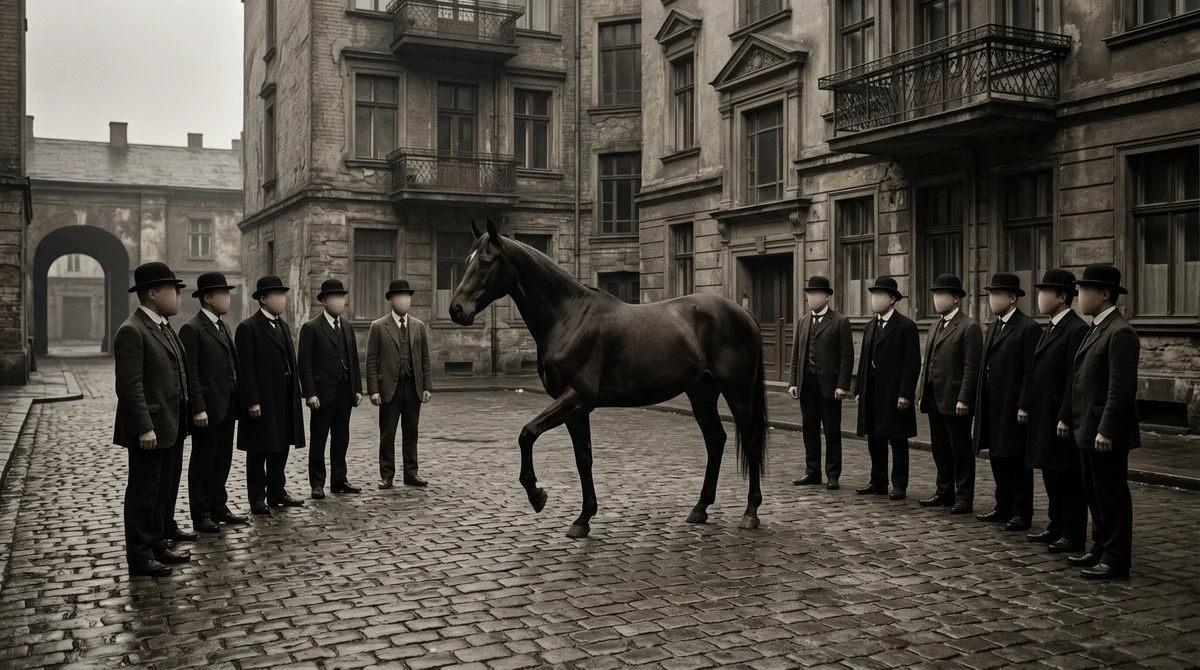
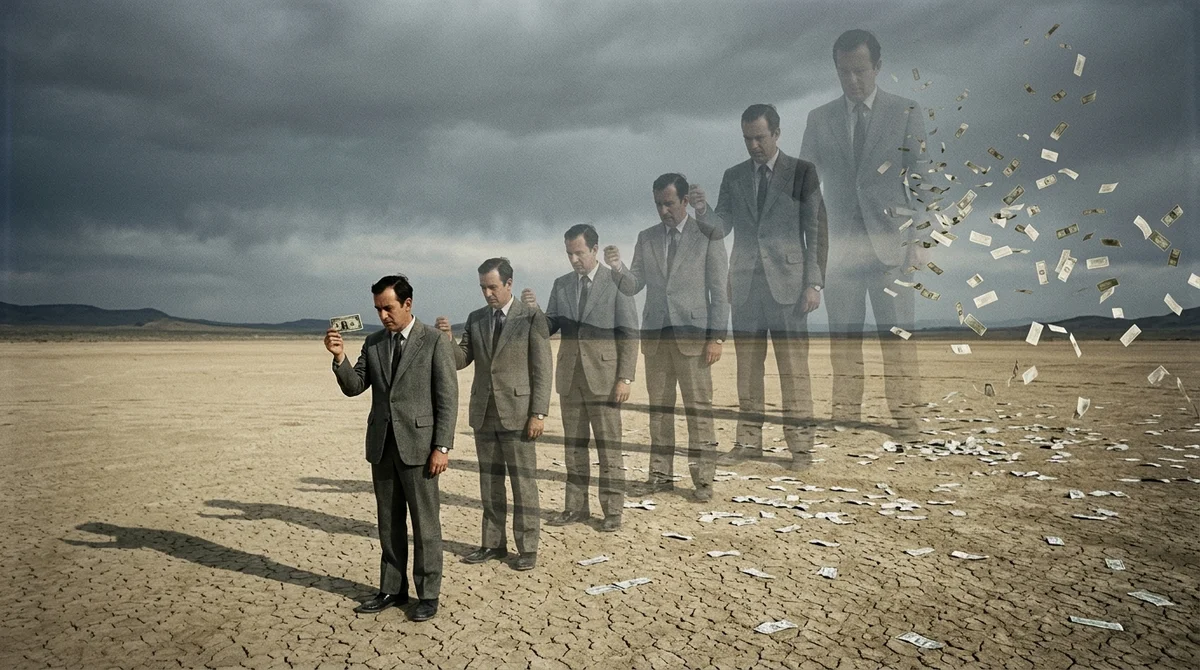
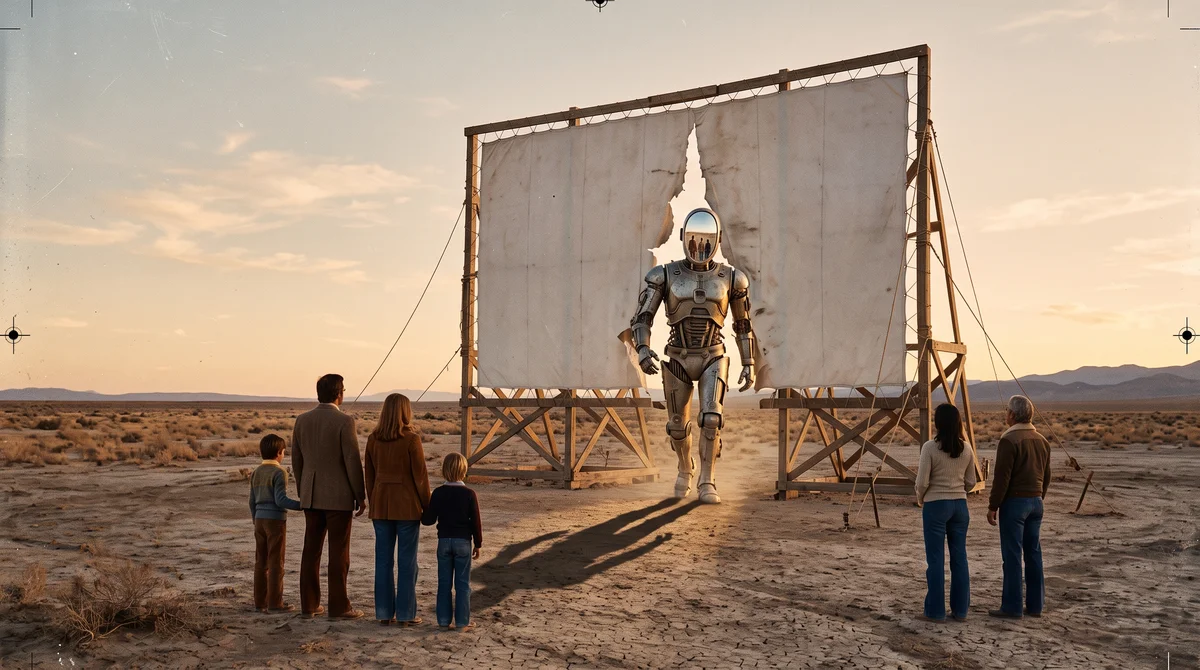
In my film, Intelligence Is a Salamander and a Violin, I explore the possibility that we've been looking for intelligence in the wrong place. We keep looking inside intelligent beings, instead of examining what happens among them, within them, and in their interactions with the world.
That sounds abstract. But consider a naval ship trying to enter a harbor. Its position is determined through an elaborate process involving people, instruments, charts, and knowledge accumulated over generations. No single sailor performs the whole job.
The question is whether the intelligence involved belongs exclusively to the people—or whether we've overlooked something important about the system itself.
Watch Intelligence Is a Salamander and a Violin to see what an eighteenth-century instrument and a regenerating animal have to do with this question.
The Navigator Who Wasn't One Person
A ship is approaching a harbor. The crew needs to know exactly where it is.
One sailor takes a bearing on a landmark. Another takes a bearing on something else. Measurements are communicated, recorded, and plotted as lines on a navigation chart. Where those lines intersect, the crew obtains a position fix.
It sounds straightforward, until you consider what's actually happening.
The people taking bearings don't have to carry out all the calculations. The person working with the chart doesn't have to see every landmark. And the chart itself embodies knowledge accumulated by surveyors, cartographers, and navigators who aren't aboard the ship.
The ship's position emerges from an organized sequence of interactions.
This isn't a thought experiment. Anthropologist and cognitive scientist Edwin Hutchins studied navigation aboard U.S. Navy ships. In his 1995 book, Cognition in the Wild, he argued that the navigation team could be examined as a cognitive system in its own right.
Not simply a collection of individuals thinking separately.
The arrangement of people, instruments, procedures, and recorded information performed a cognitive task that none of its components performed alone.
And here's what's particularly interesting: some of the information was carried by marks on paper. Some was carried by instruments. Some by people. Some by an inherited set of practices.
If you tried to locate the entire process inside one sailor's skull, you'd be looking in the wrong place.
The Notebook That Became Part of a Mind
Three years after Hutchins's book, philosophers Andy Clark and David Chalmers published an essay called The Extended Mind.
They introduced two fictional people.
Inga wants to visit a museum. She remembers its address and goes there.
Otto wants to visit the same museum. Because he has Alzheimer's disease, he relies on a notebook that he carries everywhere. He consults the address and goes there.
Inga retrieves the address from biological memory. Otto retrieves it from the notebook.
The obvious response is that Inga remembers while Otto merely looks something up.
Clark and Chalmers asked why that distinction should settle the matter.
If the notebook is reliably available, routinely consulted, and used to guide Otto's actions, couldn't it be performing part of the role that memory typically performs inside the brain?
Their proposition was that some cognitive processes might extend into the environment. The notebook would not merely help Otto think. Under the right circumstances, it could be part of the thinking system.
Now, that's a much more unsettling idea than the familiar observation that tools help us solve problems.
And it's still debated.
Critics point out that something can influence a cognitive process without becoming part of it. A library can help me write an essay. That doesn't automatically make the entire library part of my mind.
Fair enough, though honestly, I lean towards the notion of the library being part of my mind. But where should we draw the boundary?
At the skull? At the notebook? Somewhere within the particular interaction that allows the task to be accomplished?
Cognition Isn't Necessarily Intelligence
There's a distinction here that matters to the investigation in my film.
Hutchins studied distributed cognition. Clark and Chalmers questioned the boundaries of the mind. Neither established a general definition of intelligence.
Cognition includes processes such as remembering, representing, and manipulating information. Intelligence is the harder question I'm pursuing: under what circumstances do interacting systems respond creatively, discover possibilities, or reorganize themselves into more viable arrangements?
A navigation chart isn't an intelligent being. Otto's notebook isn't having thoughts of its own.
But the systems they participate in can accomplish things that become difficult to explain when we insist on examining each component in isolation.
The important question isn't whether every useful tool should be declared intelligent.
It's whether we're choosing the wrong unit of analysis.
The Boundary May Be the Problem
This brings me back to Stradivari.
It's easy to attribute the creation of a remarkable violin to the intelligence of one remarkable man. But that achievement depended on wood, tools, acoustic feedback, musicians, and centuries of accumulated craft knowledge.
Hutchins's ship adds an interesting parallel. The chart doesn't navigate, the instrument doesn't navigate, and no one isolated sailor carries out the entire operation. Yet the crew can determine where the ship is.
The salamander takes the inquiry somewhere else again. Its regeneration relies on interactions among biological components rather than human beings communicating with instruments.
Different phenomena.
But they expose the same habit: we identify the most obvious individual and treat that individual as the natural home of the achievement.
Maybe the first question shouldn't be Which thing is intelligent?
Maybe it should be: What organization of relationships makes intelligent activity possible?
If that's the right question, it changes what we ought to study—and perhaps what we ought to invest in developing.
Not merely more capable individuals or machines, but better conditions for intelligence to occur.
I don't regard that as the final answer. It's becoming the question that connects this entire investigation.
Selected Sources
Go further with each film. Get the free companion articles by email: a short introduction to each new video, plus selected evidence and ideas beyond it. Subscribe Free.