Brexit at 10: How Story Became Economy
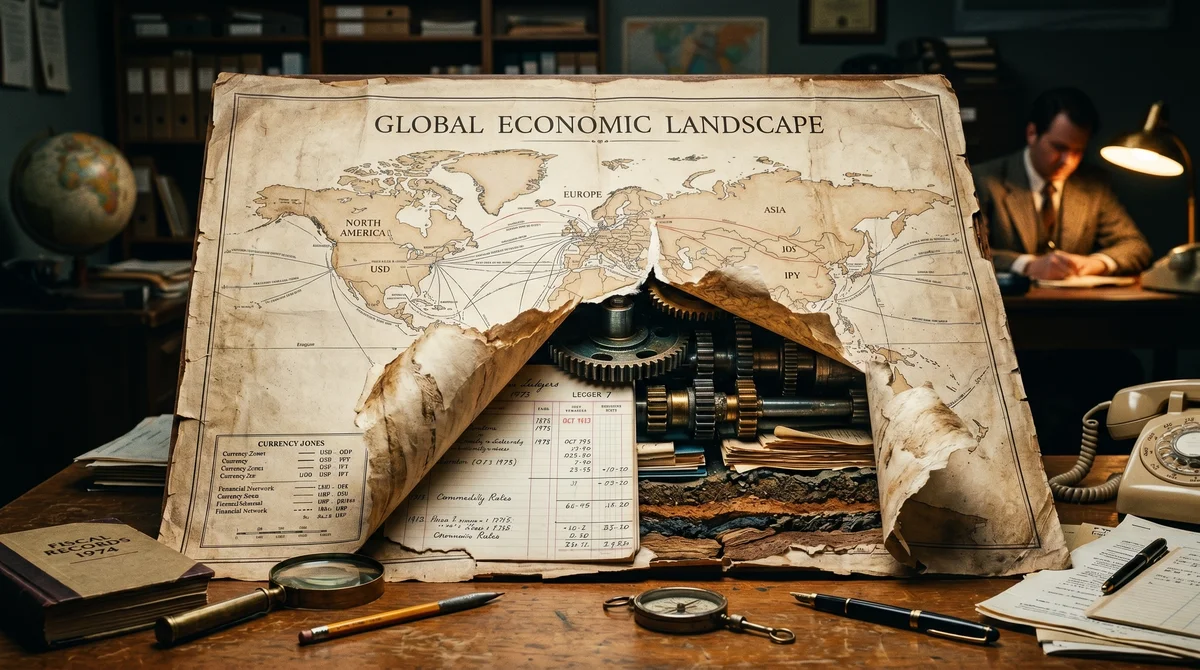
Brexit's real cost isn't in the GDP figures. It's in the machinery that decides which figures reach the public — and which never do.
July 21, 2026July 2026
1. THE SPECIMEN
Brexit at ten isn't an economic story that has narrative complications. It's a narrative story that has economic consequences.
You'd be forgiven for reading that as a rhetorical setup — a clever inversion designed to sound provocative before the analysis settles back to familiar ground. Very little coverage of Brexit, or of any story that moves world markets, makes a claim like that with a straight face. The convention is to treat the economics as the real substance and the narrative as color, as complication, as the messy human drama that surrounds the serious business of GDP figures and trade deficits. But I mean the inversion literally. And the remainder of this entry — along with the larger project it belongs to — is a tour of what becomes visible when you take it literally. What follows is a brief history of Brexit, told from the other side of a looking glass that almost no one in the financial commentary landscape acknowledges exists.
The switch the country pulled in 2016 has been followed by ten years in which every major political question — what the exit cost, who it hurt, whether immigration rose or fell, whether rejoining would fix anything — has been shaped not by the available evidence but by what happened to that evidence on its way to an audience. Some of it was simplified. Some was reframed. Some was recruited to serve a purpose it couldn't support. And some of what should have happened to it — the context that should have been added, the verification that should have been performed, the questions that should have been asked — never occurred at all. Those gaps aren't incidental. They're doing as much work as the information that made it through.